

Design Fundamentals
The 60-30-10 Rule in UI Design: How to Split Your Colors
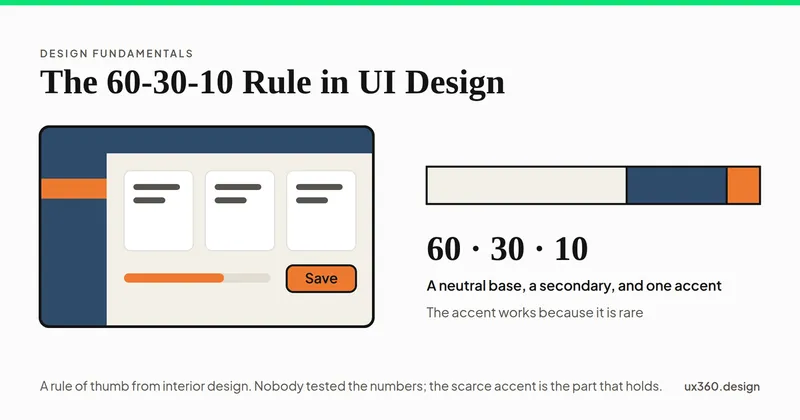
The 60-30-10 rule splits a design into 60% base color, 30% secondary and 10% accent. See how it works on a screen, why the accent matters most, and its limits.
Page 2 of 7. Articles 13 to 24 of 81, newest first. Pick a topic in the bar above to narrow down.
The 60-30-10 rule splits a design into 60% base color, 30% secondary and 10% accent. See how it works on a screen, why the accent matters most, and its limits.
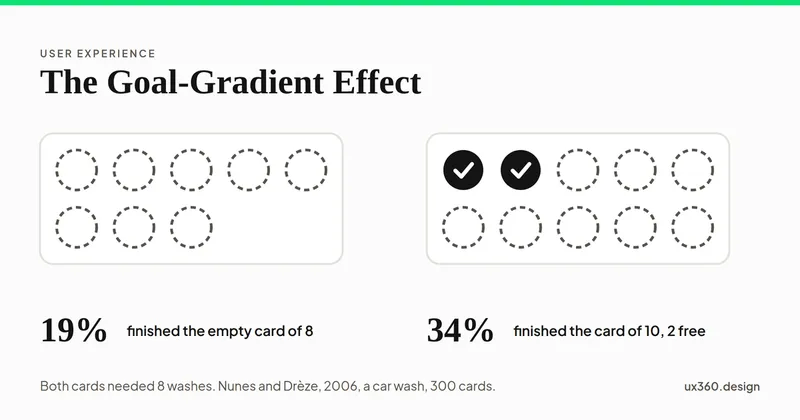
The goal-gradient effect: people try harder the closer they get to a goal. See the loyalty card studies behind it and how to use progress honestly in a product.
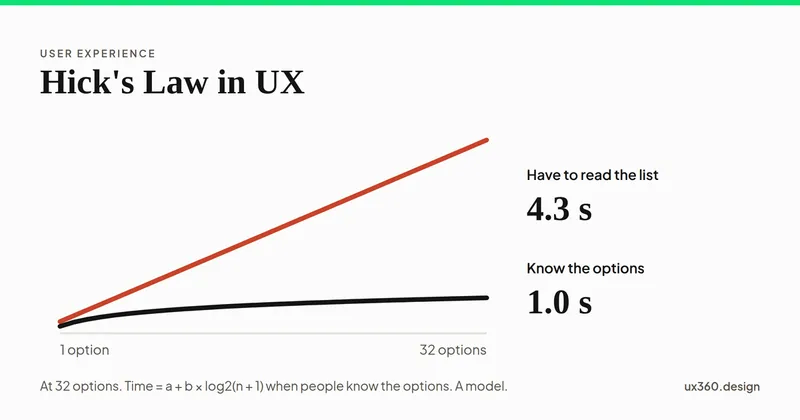
Hick's law says the time to choose grows with the number of options, but only by a little. See where it holds, where it breaks, and how to design menus with it.
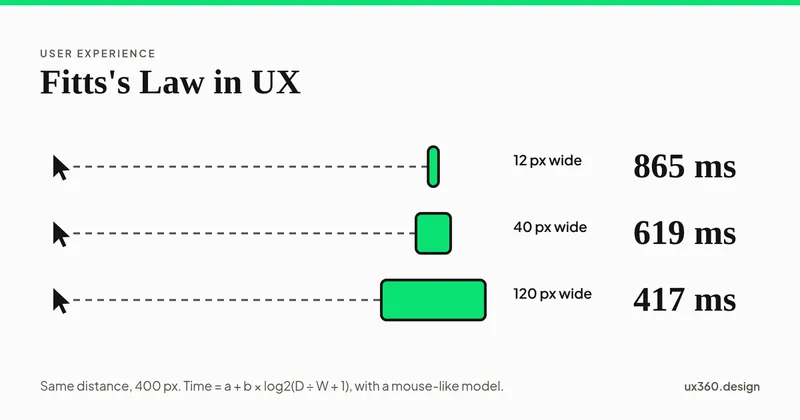
Fitts's law says the time to hit a target depends on its distance and its size. See the formula live, why screen edges are fast, and how to size buttons.
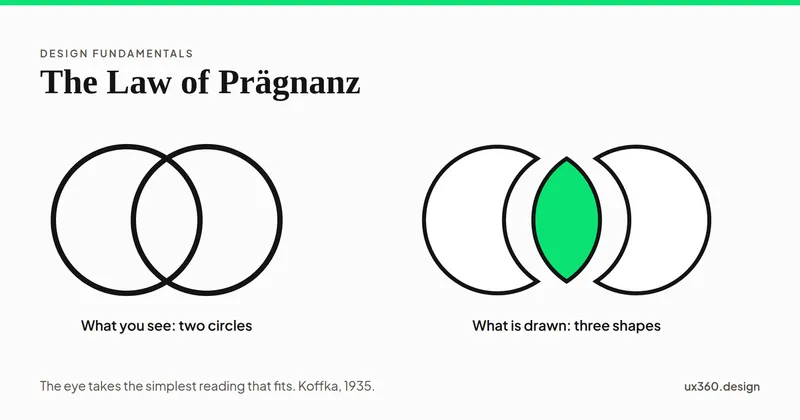
The law of Prägnanz says we see the simplest shape that fits what is in front of us. See it in rings, cubes and cards, and how to use it to simplify a design.
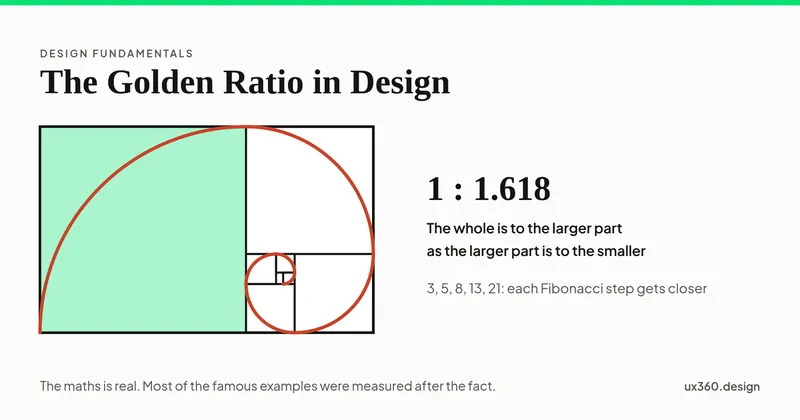
The golden ratio is about 1.618 to 1. See how it splits a layout, which famous examples hold up, and when a type scale or grid on 1.618 helps your design.
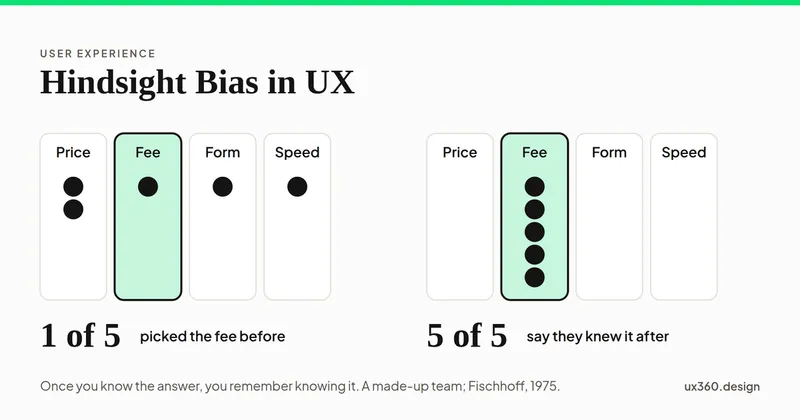
Hindsight bias makes a result feel obvious once you know it. See how it hides what research taught you, with the classic studies and a way to stop it.
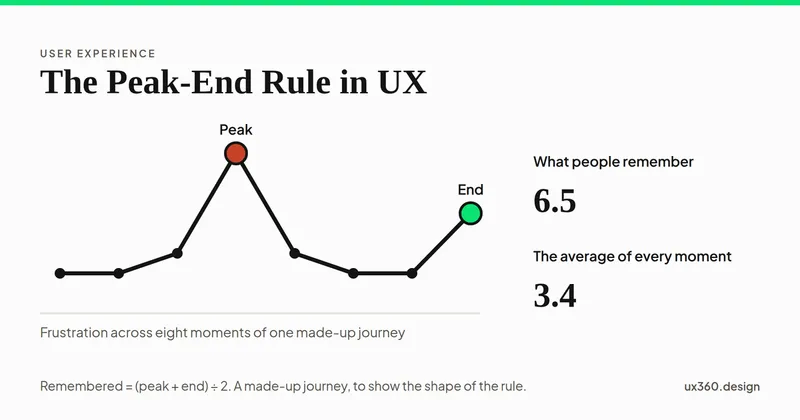
The peak-end rule says people judge an experience by its worst moment and its end, not its average. See the studies, examples and how to design the last step.
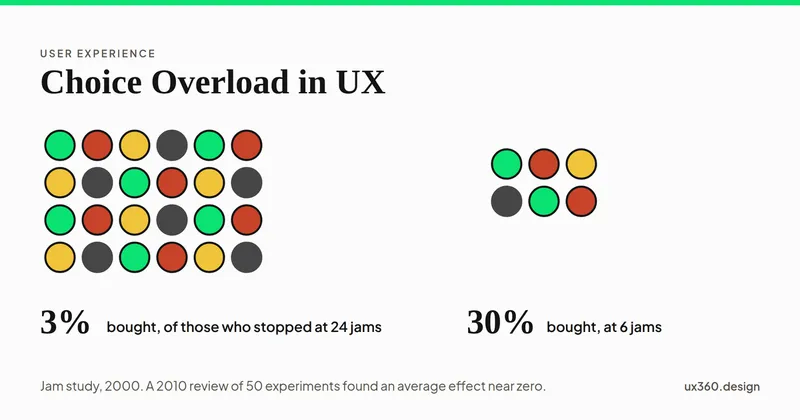
Choice overload is when too many options make a choice harder. See what research says, when it happens in UX, and how to ease the load without removing choice.
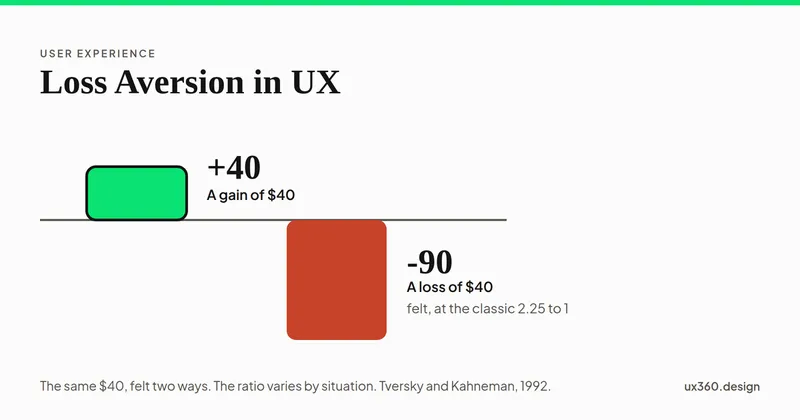
Loss aversion is feeling a loss more than an equal gain. See how it shapes trials and warnings in UX, what the research really says, and how to use it fairly.

Survivorship bias is studying only the people who made it through. See how it skews UX surveys and reviews, with a famous WWII example and a way to catch it.
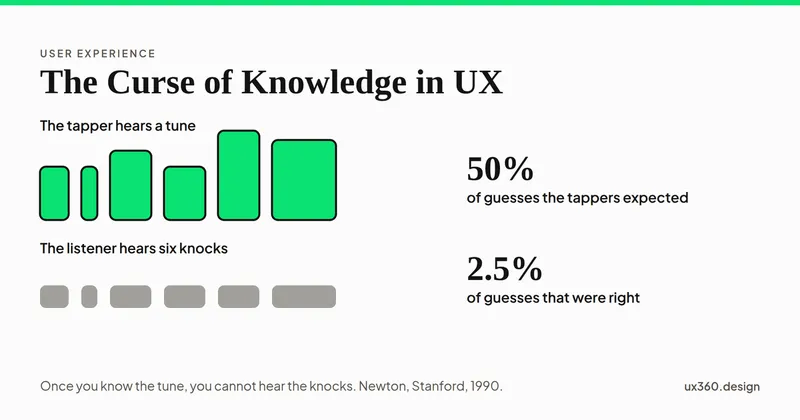
The curse of knowledge is forgetting what it is like not to know something. See how it hides in labels and steps, with a classic study and a way to fix it.