

![The 11 Principles of Design and Art [Infographics Included]](/_astro/principles-of-design-and-art-1.jIpeTnWF_192c4L.webp)
Design Fundamentals
The 11 Principles of Design and Art [Infographics Included]
Repetition, rhythm, movement, balance, proportion, white space, contrast, emphasis, hierarchy, variety and unity, explained with examples and a free PDF.
Free course, 4 chapters, 27 lessons
AI already makes the screens. It cannot tell you who they are for, what they actually do, or why the good-looking one still fails. That judgement is the job now, and it is the part nobody is automating.
No email, no signup, nothing to buy. The first lesson opens in the next click.
The elements and principles of design, with real interfaces as examples. Balance, contrast, emphasis, hierarchy, white space, Gestalt and more. Free to read, in any order, no course required.
Repetition, rhythm, movement, balance, proportion, white space, contrast, emphasis, hierarchy, variety and unity, explained with examples and a free PDF.
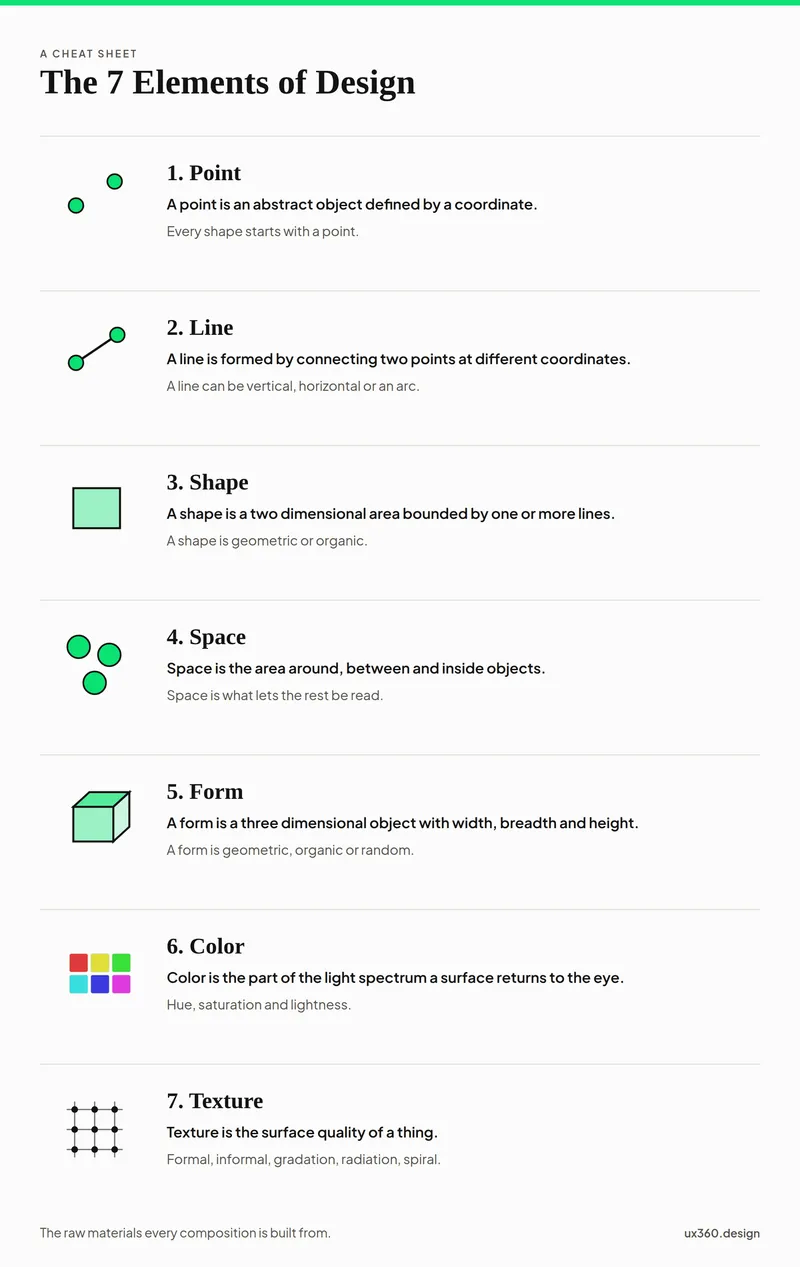
The 7 elements of design are point, line, shape, form, space, color and texture. Each one explained with real interfaces, plus a free printable infographic PDF.
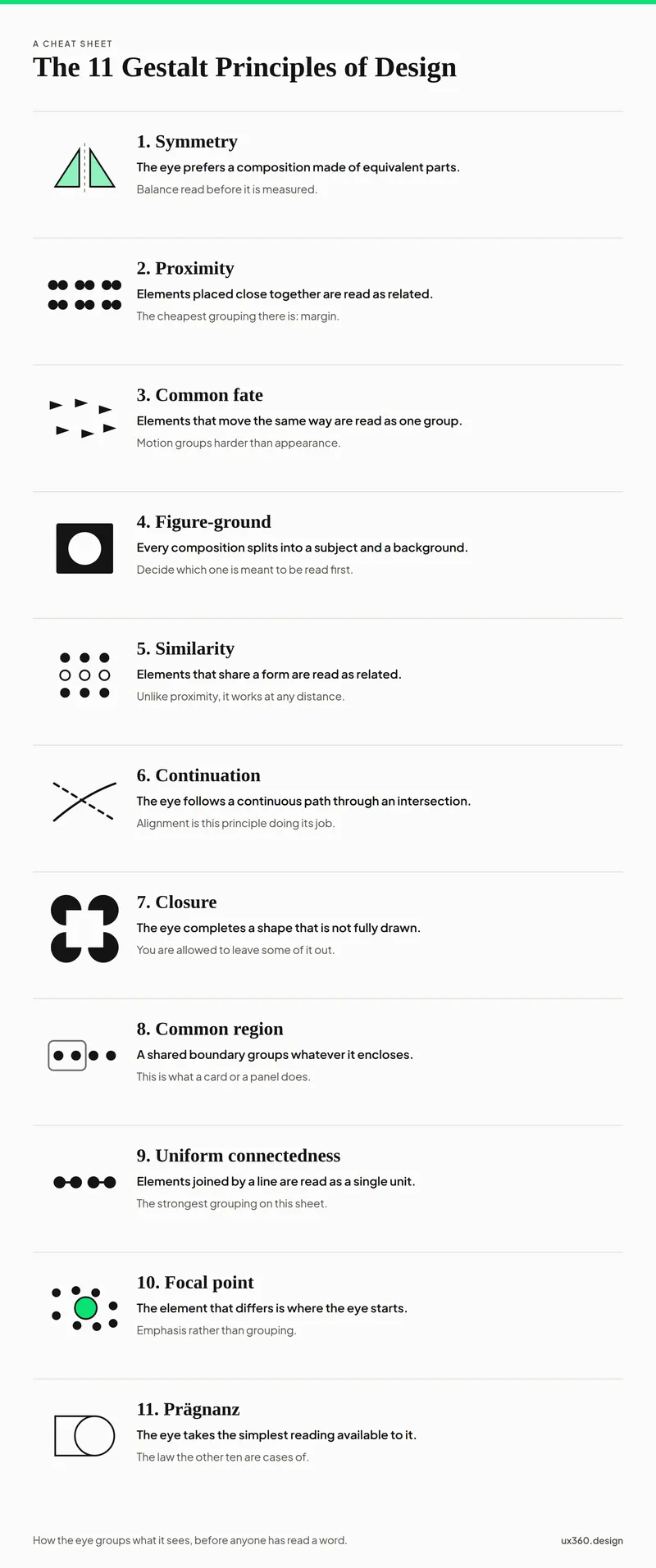
All 11 Gestalt principles with interface examples and interactive diagrams, from proximity and closure to common region and Pragnanz. Free cheat sheet PDF.
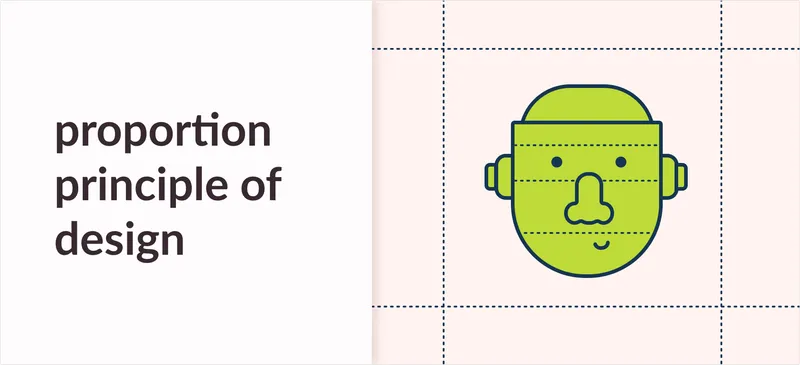
What proportion means in design, how size and visual weight relate, and how to use scale to guide attention. Clear examples from apps, posters and architecture.
I started this site in 2019 as bestDesignTrend, mostly to write down answers to design-tool problems that were annoying to find. Readers kept asking to be taught UX instead, so the writing moved to the foundations: the elements and principles of design first, then the mindset that separates UX from UI.
AI can produce screens, personas and research reports in seconds. It cannot tell you whether any of it is true. That is the whole reason the course exists. Knowing what frustrates people, what moves them toward a milestone, and what they keep coming back for is learned, not generated.
Everything here comes out of working product design, with real interfaces as the examples. Nothing is gated and nothing is for sale.

Shirish ShikhrakarUX Engineer and Designer